Camera
structures inside smartphone hardware board
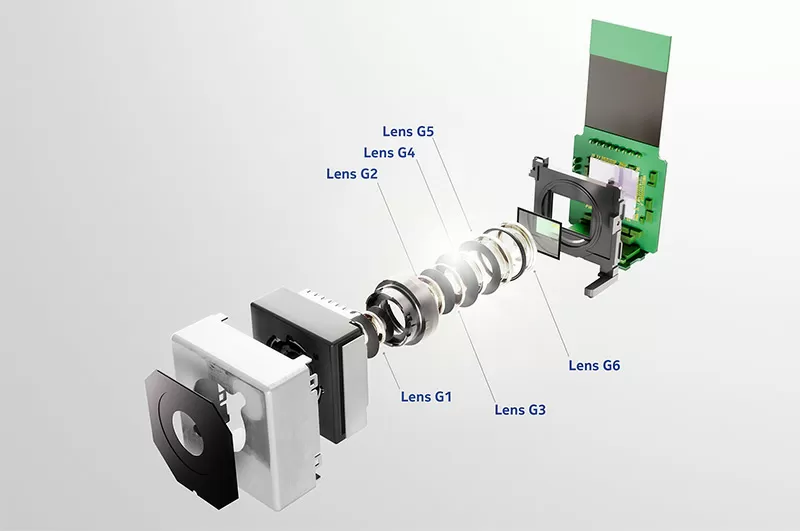 |
| techspot.com |
Almost all smartphones come with a
Front-facing and Rear-shooting camera.
A smartphone comprises up of three main
parts:
The sensor which detects light
The lens the component in which light comes
through & the
image processor
How it works actually?
1 -The user or smartphone focuses the lens
2 -Light enters the lens
3 -The aperture determines the amount of light
that reaches the sensor
4 -The shutter determines how long the sensor is
exposed to light
5 -The sensor captures the image
6 -The camera’s hardware processes and records
the image
The megapixels on the smartphone are still an
important part of the camera, it carries less importance than it did a while
back. Instead, the primary limiting factor is the camera sensor of the phone
and how sensitive it is when light passes through the lens.
 |
| digitaltrends.com |
Each sensor behaves very differently in a
different smartphone, so every single image or video that you capture will be a
variation of contrast, color accuracy, saturation and several others compared
to a different handset. Most camera apps have manual settings so you can
capture an image or video based on your own settings, but most devices don’t
have such an extended list of controls.
Since smartphones have small sensor sizes,
they tend to perform badly in low-light areas. This is an area where camera
sensor manufacturers have worked incessantly to improve considerably, but they
have a long road ahead of them it appears.
How focusing works?
A mechanism that restricts how much light
passes through the lens and into the camera itself in order to control what’s
called depth of field, or the area of the plane that appears in focus. The more
your aperture is closed in, the more of your shot will be in focus, and the
more open it is, less of your total image will be in focus.
 |
| wikipedia |
Wide open apertures
are in photography because they allow you to take photos with a awesome blurry
background, highlighting your subject while narrow apertures are great for
things like macro photography, landscapes, portraits etc.
The ƒ-stop is a ratio of the focal length
divided by the aperture opening. For example, a lens with a 50mm focal length
and an opening of 10mm will be listed as ƒ/5. This number tells us a very
important piece of information: how much light is making it to the sensor.


No comments:
Post a Comment